
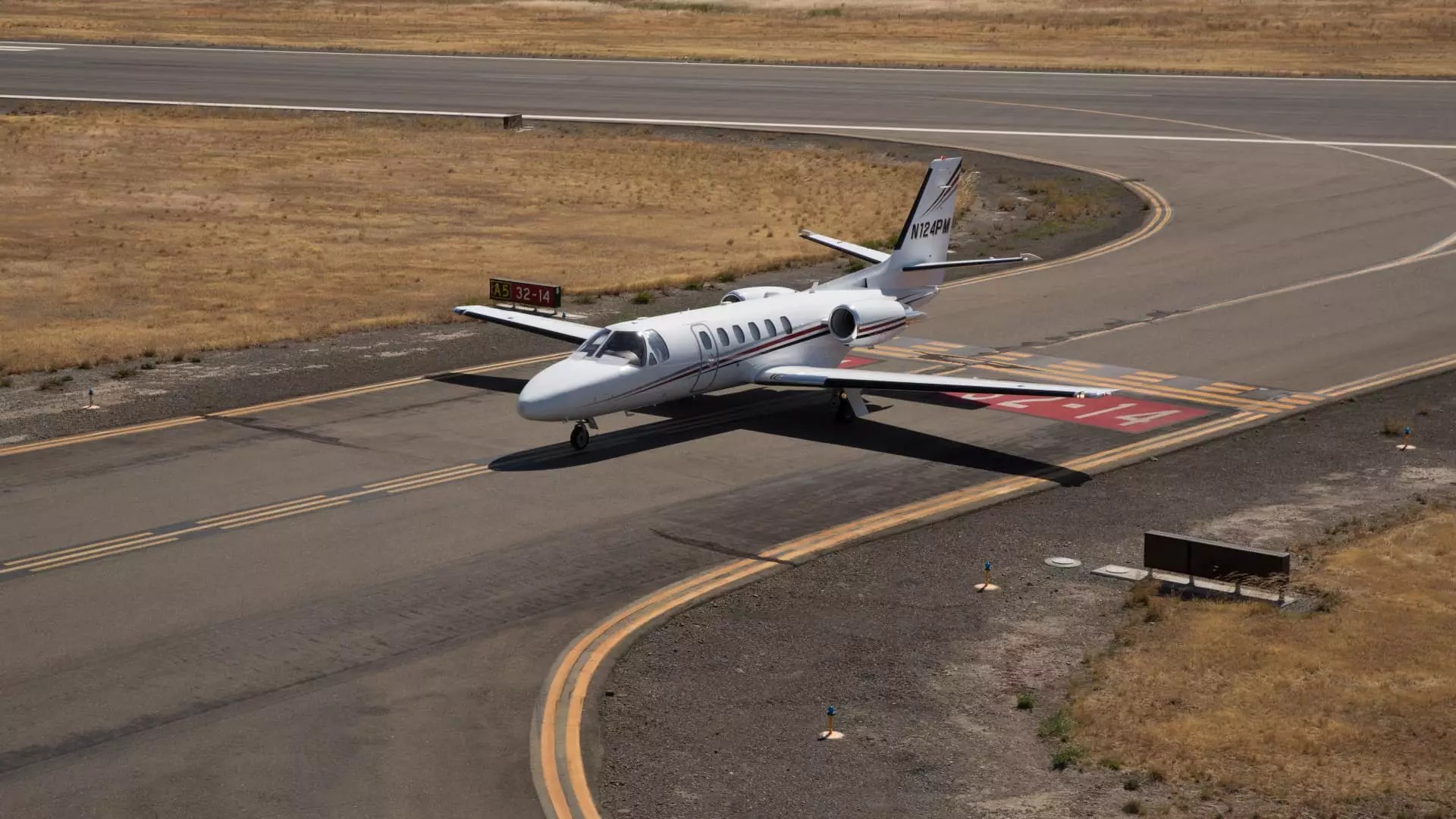
The latest findings from Barclays regarding the business jet market present a stark, cautionary tale for both investors and consumers alike. The report reveals a staggering 49% plunge in customer interest for buying business jets since March—a statistic that reflects a declining consumer confidence which extends beyond the wealthy elite. This downturn raises serious questions about the stability of the aviation sector and the broader economy. Given the score dropped from 52 to 40—a composite score that indicates clear market slowing—the implications of such a significant decrease are hard to overlook.
As individuals, businesses, and investors grapple with uncertainties, it appears that the previous optimism for air travel has dissipated. The turbulence is fueled not only by shifting consumer behavior but also by rising tensions around tariffs and their impact on economic activity. When nearly half of the surveyed respondents noted a decrease in acquired interest, it’s clear that the luxury air travel industry is facing headwinds that could alter its trajectory for years to come.
Market Indicators Show Declining Health
The Barclays Business Jet Indicator survey employed a thorough methodology, relying on five critical metrics to gauge market conditions. While one of those metrics showed stability in inventory levels, all others experienced notable declines. This is particularly worrying because a composite score in the low 40s mirrors not just hesitation in purchasing but also a broader aversion to capital investment amid economic instability.
As noted by Barclays analyst David Strauss, the connection between survey responses and manufacturers’ health is vital. The airplane makers’ book-to-bill ratio—a key financial health indicator—is being adversely affected, suggesting that not only are potential consumers withholding purchases, but those manufacturing operations are on rocky ground. A score hovering at 40 conveys that new orders are lagging significantly behind current work—a signal to investors that the air travel market is experiencing a downturn that may further complicate economic recovery.
Tariff Anxiety and the Broader Economic Context
Compounding these issues is the looming threat of tariffs, which nearly all survey respondents deemed detrimental or critically harmful to the aircraft market. A concerning 93% foresaw a negative effect on demand due to tariffs, and the majority anticipated that the impact will be pronounced. This fear is exacerbated by broader economic anxieties; businesses are not only worried about the cost of their potential aircraft purchases but are also contemplating the effect of tariffs on their overall operations.
The intertwining relationship between politics and business in this sector cannot be understated. Ongoing discussions regarding the extension of the Tax Cuts and Jobs Act may offer a glimmer of hope for manufacturers if they can fully deduct their costs. Yet, even the prospect of legislative relief seems overshadowed by the growing uncertainty enveloping trade relations and economic continuity.
The Road Ahead: Navigating Through Challenges
While the report underscores a troubling climate, it also lays bare the opportunities for astute stakeholders in the sector. The potential legislative change to restore immediate deductions could pivotally rejuvenate interest in business jets if enacted. However, this glimmer of hope must contend with the stark realities of shifting consumer confidence and trade issues.
It’s an irony that, as affluent consumers curtail discretionary spending on luxury items like jets, economic policymakers are grappling with how best to inspire confidence across the market. If the industry is to rebound, both sides must engage thoughtfully in addressing the structural issues at play—ensuring that business aviation is not just a fleeting luxury but a sustainable model of commerce that contributes positively to economic vitality.
In this climate of uncertainty, every statistic looms large, and the 49% drop in interest reveals not only the apprehensions of potential buyers but a significant reflection of wider economic anxieties. There’s a compelling need for vibrant dialogues between businesses, regulators, and consumers to foster an environment conducive to recovery and growth in the aircraft market.

- Investment Planning For Students Yelofunding - January 8, 2026
- Commercial Real Estate Analysis And Investments Types - January 8, 2026
- 500 Million Reason to Pause: A Critical Look at Louisiana’s Tax Proposals - June 6, 2025
Leave a Reply