
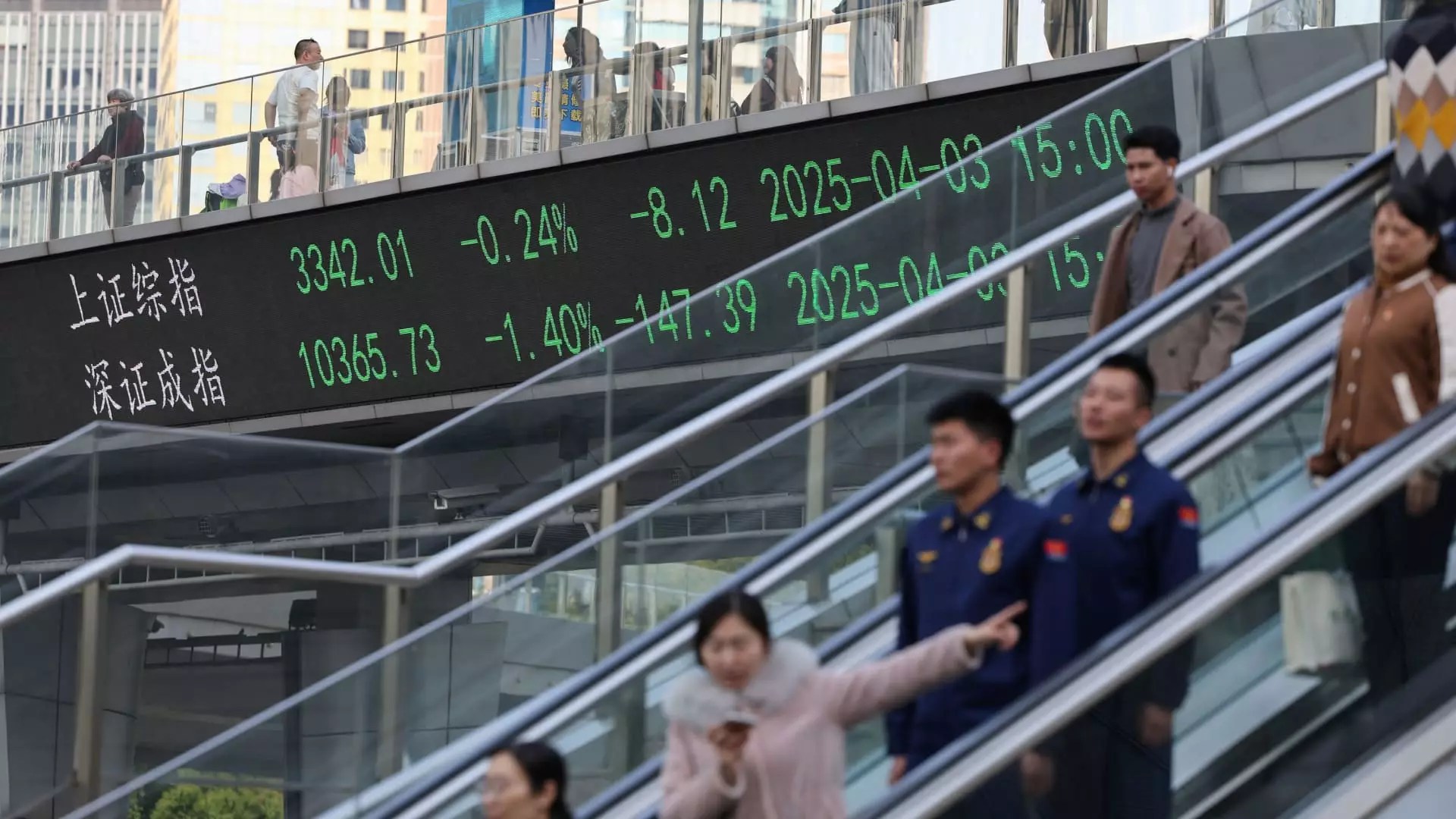
The global marketplace is often rendered anxious by political shifts, trade wars, and tariff impositions, particularly when it comes to powerhouses like China. Analysts may express concerns about the lingering impact these tariffs have on China’s stock performance, yet a deeper examination reveals a contrasting narrative: China’s technology sector may be on the brink of unprecedented growth through homegrown artificial intelligence (AI) advancements. In an increasingly digitized world, it is imperative to understand how China is navigating the geopolitical minefield while simultaneously propelling its tech industry to new heights.
The Tariff Effect: Short-term Panic, Long-term Strategy
When the United States issued new tariffs targeting China and its Southeast Asian partners, a wave of anxiety washed over global investors. Chinese stocks tumbled initially, sending shockwaves through local and international markets. However, a crucial insight from Kai Wang, an equity strategist at Morningstar, underscores a gratifying truth: many prominent Chinese tech companies possess limited direct exposure to the U.S. market. This may appear overshadowed by initial reactions, but it emphasizes the long-term outlook: key players in China’s technology sector are well-poised to harness their domestic market and stand resilient amid unpredictability.
The pulse of the market may quicken with every tariff announcement, but for the tech sector, the focus ought to be on its balance sheets and growth vectors. Wang suggests that fiscal policy interventions could cushion any potential economic downturn, hinting that Chinese policymakers are wisely holding onto their fiscal resources. This proactive stance suggests an intention to safeguard the tech sector’s viability during turbulent economic times, a strategy driven by calculated optimism.
Valuations That Invite Attention
Another compelling argument buoying China’s tech industry is the stark contrast in valuations between Chinese stocks and their American counterparts, particularly the so-called “Magnificent Seven.” According to insights gathered by Citi strategists, leading Chinese tech stocks boast average price-to-earnings ratios that are a staggering 52% lower than those of their U.S. peers. This discrepancy makes them an attractive proposition for investors looking to capitalize on growth potential while hedging against geopolitical uncertainties.
Investors are right to shift their focus to domestic growth narratives over export-driven models, as uncertainties stemming from potential tariffs linger. The recommendation pushes toward sectors focused on services rather than goods, carrying implications for development encouraged by macroeconomic policies intended to support the consumer-base and broader market growth.
Investor Sentiment and the Inevitable AI Disruption
Despite the apprehensions brought forth by ongoing tariff debates, investor sentiment toward Chinese tech has shifted positively, with nearly a quarter of international investors reporting increased confidence in the sector. This burgeoning interest cannot be overlooked, as it aligns harmoniously with the global inclination toward generative AI technology. Companies like DeepSeek have emerged to capture this landscape, revealing a capacity to compete against giants like OpenAI’s ChatGPT even amidst the heavy fog of U.S. export restrictions on essential chips.
AI integration within Chinese enterprises is expected to stimulate efficiency and lower operating costs, ensuring profit margins remain intact even when traditional avenues may face hurdles. The merger of advanced technologies and economic strategy creates a fertile ground for sustainable growth in the tech sector.
Healthcare: An Untapped Gem Shielded from Tariff Strikes
While tariffs are hitting various sectors indiscriminately, the Chinese healthcare sector presents a fascinating exception. Analysts persistently highlight how many Chinese biotechnology firms are insulated from these trade restrictions due to their existing partnerships with U.S. entities and the exclusion of pharmaceutical products from the latest rounds of tariffs. This unique positioning grants homegrown firms like Wuxi Biologics access to significant growth opportunities and a pathway to efficiency in drug production, both of which could yield substantial returns for investors who are astute enough to shift their strategies accordingly.
With sentiment across party lines in the U.S. favoring reduced drug prices, one could argue that U.S. pharmaceutical companies, along with their Chinese counterparts, will explore cooperative opportunities. This economic synergy should be seen as a bargaining chip that could further reinforce the resilience of these companies against external adversities.
A Complex Economic Landscape Demands Strategic Choices
Even with the challenges presented by tariffs, the total impact on China’s economy—I dare say—remains enigmatic. We must remember that every flicker of volatility in the market can evoke responses that might not always match the underlying fundamentals of growth we are seeing in the tech and healthcare sectors. As much as market sentiments catalyze action, it is the exchange of innovative ideas and the adaptability of companies that will forge the resilience China needs to weather any storms on the horizon.
For now, while uncertainty looms, the data informs us that the trajectory for China’s tech sector remains promising. The strategic navigation through turbulent economic waters, fueled by savvy policymaking and agile business practices, illustrates a sector that may not just survive but possibly thrive in the face of adversity.

- Investment Planning For Students Yelofunding - January 8, 2026
- Commercial Real Estate Analysis And Investments Types - January 8, 2026
- 500 Million Reason to Pause: A Critical Look at Louisiana’s Tax Proposals - June 6, 2025
Leave a Reply