
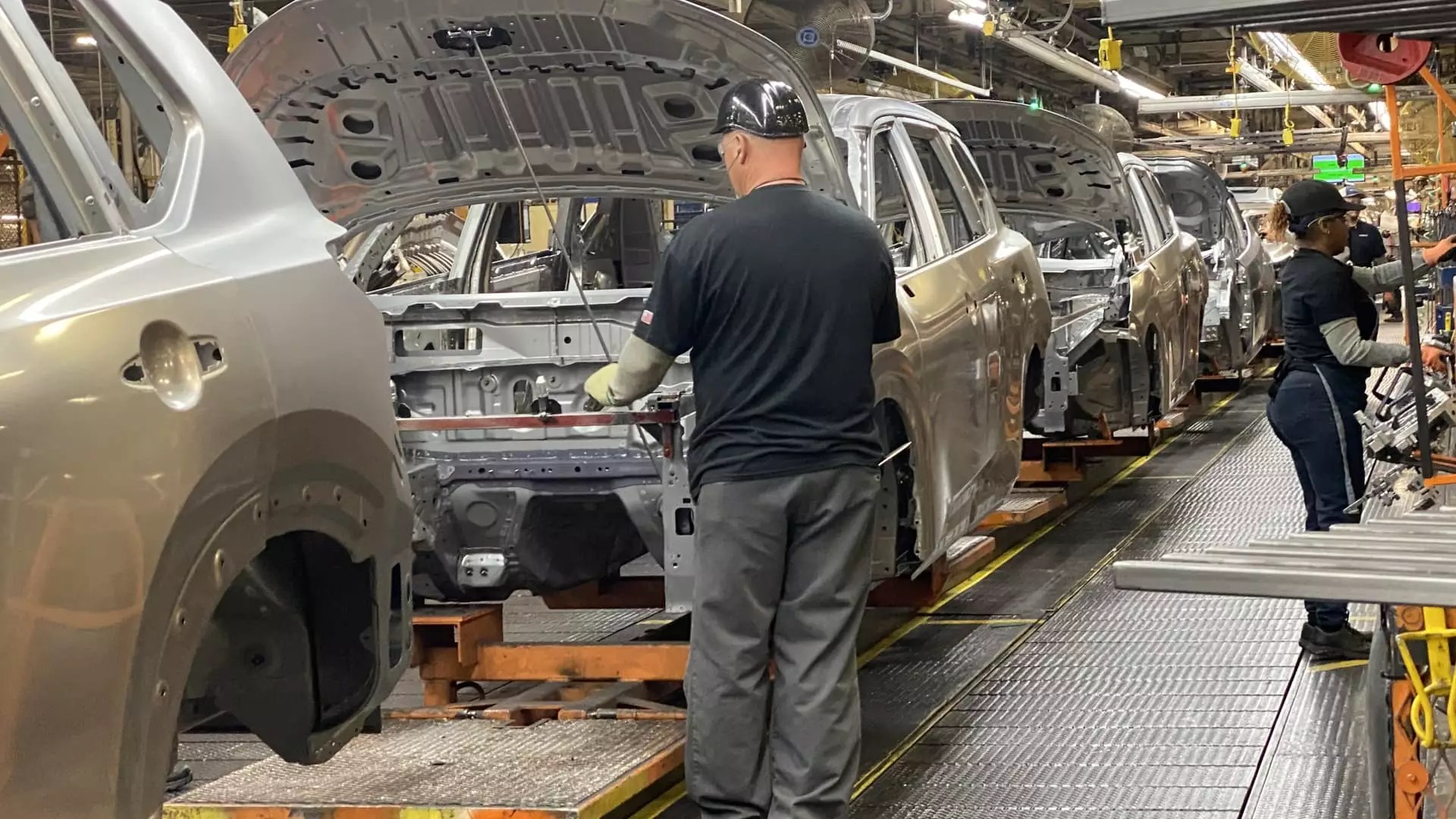
The automotive industry is currently standing at a perilous crossroads, facing an unprecedented situation under President Donald Trump’s 25% tariffs on imported vehicles. Initially implemented to bolster domestic manufacturing, these tariffs have swiftly transformed into a series of seismic shocks that analysts predict could fundamentally reshape the industry. The forthcoming reality is grim: we may witness a staggering decline in vehicle sales, escalating prices for both new and used cars, and an eye-watering $100 billion increase in industry costs. This sharp policy turn isn’t just a momentary blip; it signifies a structural shift that could have long-lasting repercussions on how vehicles are manufactured and sold.
Felix Stellmaszek from Boston Consulting Group highlights the significance of this year, stating that we may be witnessing the most consequential period for the auto industry in history. This is not simply about the immediate cost pressures, but a much deeper upheaval of the status quo, as companies will be forced to rethink their manufacturing strategies. Analysts are united in their bleak forecasts, with the Center for Automotive Research estimating a staggering $107.7 billion increase in costs for U.S. automakers alone, signaling a potential crisis that extends beyond vehicle sales.
The Pile-Up of Costs
The burden of these tariffs won’t be shouldered solely by the manufacturers; consumers will also bear the brunt of these policies. Goldman Sachs analysts predict an inevitable price hike on new vehicles by $2,000 to $4,000 over the next year due to rising import costs. Such increases come at a time when consumer sentiment is already shaky, with inflation rates reaching heights not seen since 1981. As the economic landscape grows increasingly inhospitable, anticipated repercussions will surely limit consumers’ spending power, creating a ripple effect throughout the economy.
Interestingly, automakers are trying to navigate this tumultuous environment through various tactics. Domestic companies like Ford and Stellantis have introduced temporary employee pricing deals, while international brands such as Jaguar Land Rover have completely halted U.S. shipments. Meanwhile, Hyundai has committed to holding steady price levels for the immediate future to help quell consumer anxiety. Unfortunately, these efforts may only serve as stopgap measures; industry-wide, the reality remains that consumers are staring into a potential future of crippling affordability issues.
The Roller Coaster of Vehicle Affordability
For years now, the struggle for consumers to afford new and used vehicles has become a defining issue. Cox Automotive reports that the average price for a new vehicle is scaling nearly $50,000—a figure that doesn’t even factor in financing costs, which are peaking near 9.64% for new vehicles. With loan rates climbing and affordability slipping further away, the combined effect of rising vehicle prices and stagnating wages is nothing short of catastrophic. As consumers grapple with high costs of living, the auto industry’s situation becomes increasingly grim.
Analysts speculate that the upcoming price hikes will not be limited to manufacturers; they will trickle down the supply chain, ultimately leading to a tight market with fewer vehicles available for eager buyers. Jonathan Smoke, chief economist at Cox Automotive, projected a future where both new and used vehicle prices will escalate, leading to higher costs across all segments. The anticipated increases—$6,000 for imported vehicles and $3,600 for domestically assembled ones—plus the increment due to earlier steel and aluminum tariffs, could further squeeze the already strained consumer budget.
Shifting Paradigms Amidst Crisis
Though the outlook is bleak, there’s a sense that some manufacturers may find an “opportunity in chaos” as they adapt to the tumultuous environment. The reality is that the auto industry is undergoing a metamorphosis—one that could potentially lead to more localized production and innovation. However, as we examine the prevailing headwinds, it’s essential to question whether these adjustments can realistically contend with the economic devastation wrought by these tariffs.
As automakers scramble to adapt, the wider implications of a “couple million-unit reduction in sales” cannot be ignored. Such an outcome will not just hurt the industry; it threatens livelihoods, jobs, and the very fabric of communities reliant on automotive production. With U.S. and Canadian consumers both facing the same economic pressures, the implications are poised to have a dramatic effect on the overall economy, where inflation and disposable income will be tested to the limit.
The future trajectory of the automotive industry remains uncertain. With the tariffs in place and costs escalating, the hope for a vibrant and accessible vehicle market is quickly dampening. As we observe this transformation from the sidelines, one must wonder: in the name of protecting domestic manufacturing, what price are we willing to pay, and will it secure a future worth fighting for?

- Investment Planning For Students Yelofunding - January 8, 2026
- Commercial Real Estate Analysis And Investments Types - January 8, 2026
- 500 Million Reason to Pause: A Critical Look at Louisiana’s Tax Proposals - June 6, 2025
Leave a Reply