
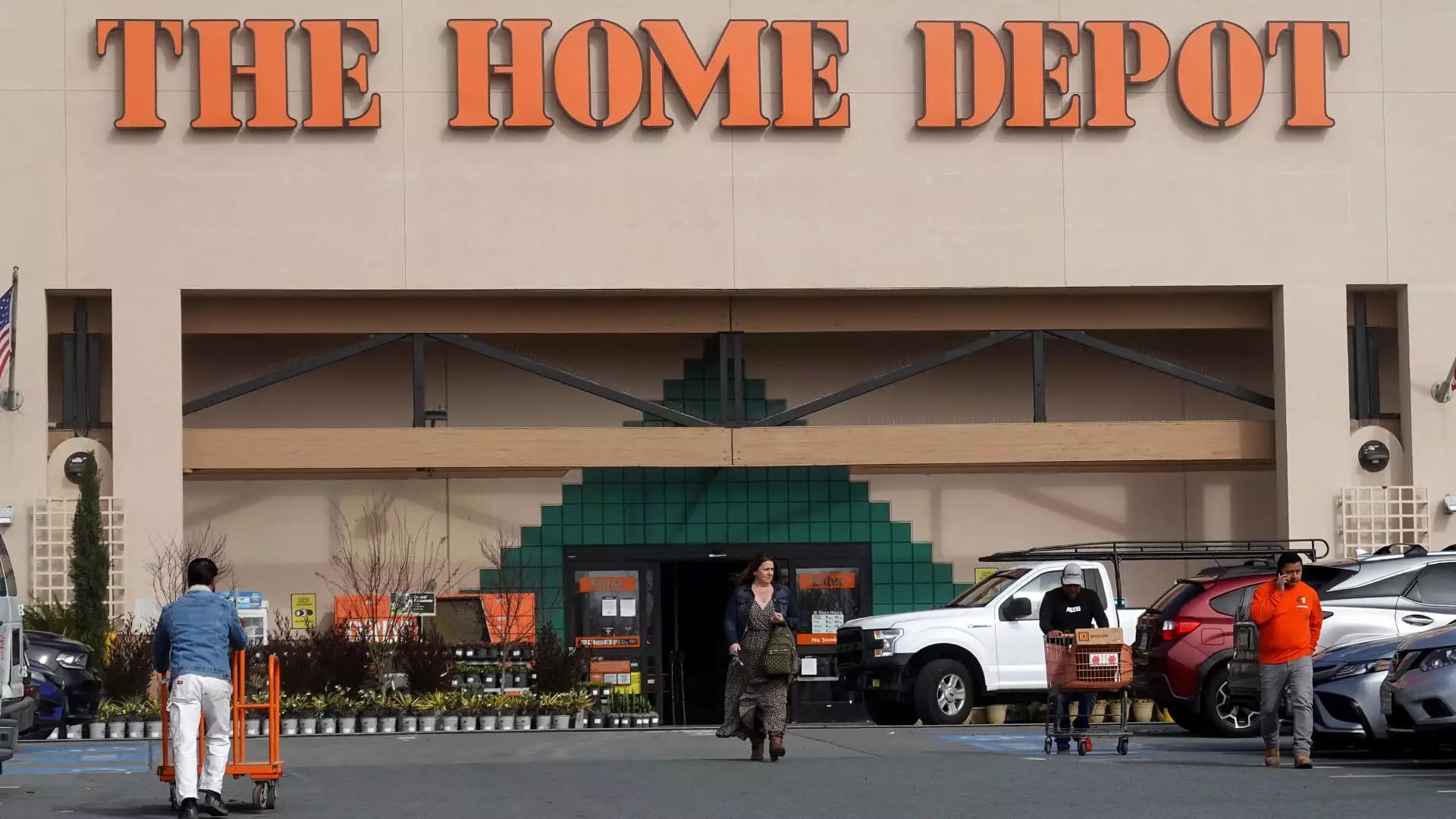
As we usher in the spring season, Home Depot positions itself as a frontrunner in the home improvement sector. Jim Cramer’s enthusiasm about this time of year is palpable; he likens it to “Christmas” for home improvement retailers, and it’s hard to dismiss his excitement. With the launch of the Memorial Day outdoor sales event, running through May 28, Home Depot aims to captivate consumer attention with enticing discounts on everything from plants to patio furniture. What appears to be a straightforward marketing strategy takes place against a backdrop of economic uncertainty that warrants a more nuanced evaluation.
In fiscal year 2024, the gardening segment contributed approximately $20.83 billion to Home Depot’s coffers, a modest increase of 1.29% from the preceding year. This revenue stream represents about 13% of the retailer’s total sales—far more than the 7.7% attributed to lumber and 7% to paint. Such figures suggest that outdoor sales are a vital lifeline, especially during the warmer months. Nevertheless, the company’s 2024 forecast indicates a reliance on strong performance in Q2 when historically, the company often experiences its highest sales.
Tough Conditions Looming on the Horizon
However, despite the allure of vibrant outdoor spaces and summer gatherings, Home Depot’s future is clouded by troubling indicators. Bernstein analysts have sounded the alarm, pointing to “unfavorable weather, weak consumer sentiment, and various issues with peers and suppliers” that could hamper what is seasonally the company’s weakest quarter. The looming concerns around tariffs and mortgage rates also present considerable risks that could hinder consumer spending. With the average 30-year fixed mortgage hovering just below 7%, prospective homeowners are understandably cautious, stifling the housing market that is crucial for Home Depot’s thriving business model.
Moreover, even as contract demand appears to be rebounding, led by a survey by Morgan Stanley involving 131 contractors, the overall sentiment remains subdued. It is crucial to recognize a potential disconnect; the optimism among contractors does not necessarily translate to immediate revenue for Home Depot. This discrepancy presents a unique challenge for the corporate giant as it tries to navigate consumer sentiment amidst broader economic pressures.
Investor Sentiment: A Glass Half Empty?
As the company prepares to release its first-quarter earnings, investor expectations are mixed. The consensus estimate predicts revenue climbing to $39.3 billion—an 8% increase year-on-year—but that still hints at an uphill battle for profitability. Earnings per share are expected to be only $3.59, representing a slight annual decline. What complicates this scenario is the proximity of that anticipated growth to several unpredictable external factors, including ongoing tariff debates and mortgage dynamics. Such complexities indicate that the glass may be half empty, driving investors to adopt a cautious strategy to stay afloat.
Home Depot’s stock performance further exemplifies the precarious balance it holds; despite a positive growth trajectory for the S&P 500, its shares have slipped roughly by 2.5% year-to-date, starkly contrasting with the near 1% gain in the broader market. This stark differentiation highlights investor skepticism about Home Depot’s capacity to overcome such robust economic hurdles in the near term.
Potential Hope Amidst Challenges
Yet, amidst this uncertainty, glimmers of hope prevail. As tariff concerns slowly ease due to de-escalation efforts between the U.S. and China, some analysts posit that any short-term adversity may pave the way for a more substantial recovery. UBS analysts suggested that if risks associated with tariffs indeed dampen Home Depot’s performance, they may also set the stage for a more robust rebound in the long run. Furthermore, Home Depot’s CEO Ted Decker has aimed to instill confidence among investors, asserting that his company will not only endure but flourish despite external pressures.
To borrow a phrase from Jim Cramer, although we might not be experiencing immediate sunshine, the emerging optimism surrounding contractor work and potential Federal Reserve rate cuts in the latter half of the year stirs the anticipation of a brighter forecast. Still, the ultimate impact of these anticipated changes on Home Depot’s performance will largely depend on the company’s ability to adapt and innovate in this evolving marketplace.
The duality of opportunity and threat within Home Depot’s operational landscape serves as a reminder of how delicate the balance between optimism and reality can be in the world of retail. While the potential for growth exists, it cannot be taken for granted amidst the myriad of challenges laying ahead.

- Investment Planning For Students Yelofunding - January 8, 2026
- Commercial Real Estate Analysis And Investments Types - January 8, 2026
- 500 Million Reason to Pause: A Critical Look at Louisiana’s Tax Proposals - June 6, 2025
Leave a Reply