
Municipal bonds find themselves at a precarious crossroads today, tethered to a complex economic landscape dominated by fluctuating U.S. Treasury yields and a looming tax season that threatens to siphon liquidity from the municipal market. As investors navigate this potentially stormy terrain, the overall resilience of the municipal bond market stands in question. Despite a relatively strong performance in February, culminating in a notable 0.99% increase, observers and analysts remain wary of the impending challenges that could disrupt this upward trajectory.
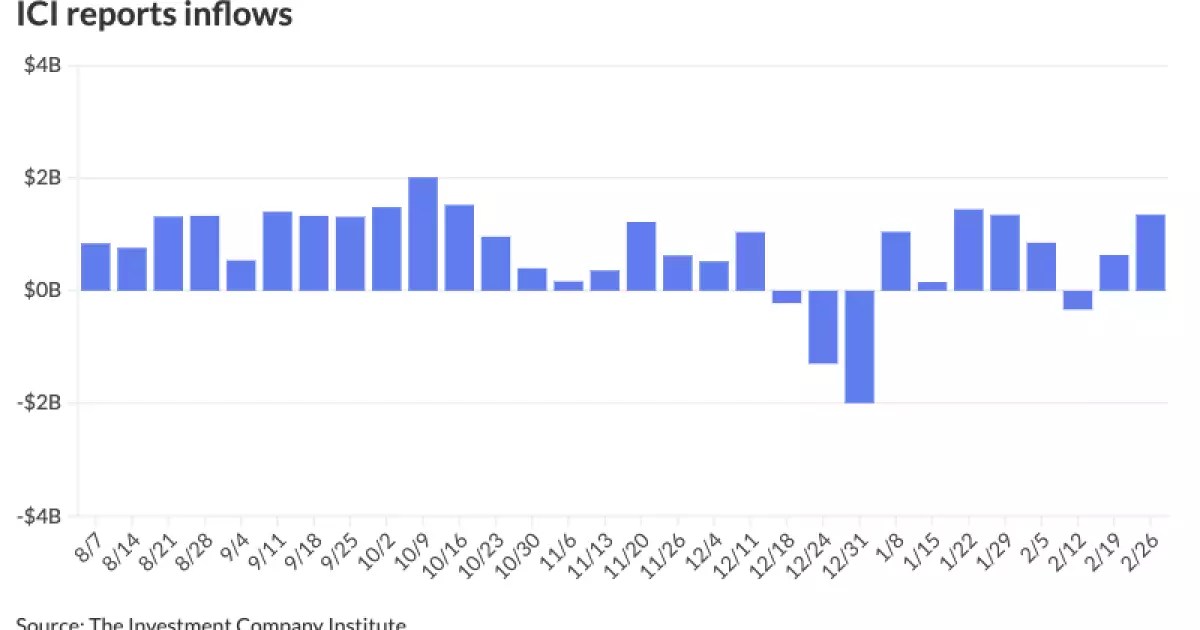
Government financing often acts like the backbone of infrastructure development—a prerequisite for sustained economic growth. However, the fact that municipal bond issuance could be overshadowed by significant redemptions and coupon payments raises concerns about market stability. Daryl Clements of AllianceBernstein articulates a fear vividly: Should issuance surpass $7 billion in a month where cash liabilities mount, we may witness a significant headwind, fueled by the deterioration of confidence among investors. While tax-exempt income has consistently drawn in impressive figures, like the $1.35 billion influx last week, the aggregate supply fails to keep pace with demand—a structural imbalance that threatens the very fabric of the market.
Market Demand vs. Supply—A Ticking Time Bomb
The dual forces of steady demand against an increasing supply of municipal bonds paint a conflicting picture. Investors added approximately $6 billion to the muni market this year, while issuance reached $70.4 billion—a significant leap from last year’s figures. Yet, analysts like Wesly Pate argue that the market remains “structurally undersupplied,” asserting that a demand for up to $1 trillion in annual issuance is crucial to adequately fund our crumbling infrastructure. This perspective underpins a disturbing reality: the predominant federal shift away from local funding leaves municipalities grasping for crucial resources.
The impending uncertainty is magnified by the potential for “blips” where excess supply might briefly disrupt fundamental ratios due to an influx of new bonds. Observers within the financial advisory space must scrutinize the landscape closely; every spike in new issuance could reveal fissures that might not be evident amidst the relative calm of current performance metrics.
Tax Season—Friend or Foe?
As April draws near, the tax season looms large in the minds of municipal bond investors.Traditionally associated with higher liquidity demands, the season poses a unique double-edged sword scenario: While investors might draw cash to meet tax obligations, the counterpoint is that the inherent demand for tax-exempt income may balance those outflows. That said, any premature withdrawal of liquidity could inadvertently depress bond values, painting a gloomy picture that insists we proceed with caution. For market participants, tax-season dynamics may prove pivotal in their calculations; should selling pressures mount as investors seek accessible cash, the negative feedback loop could destabilize an already fragile market.
Technological Innovations as a Beacon of Hope
In a market that seems haunted by its vulnerabilities, initiatives aimed at innovation and transparency may provide potential respite. Enter ficc.ai, an AI-driven pricing platform that promises to transform the landscape of municipal bond transactions. By leveraging blockchain technology, the firm aims to enhance transparency while democratizing access to vital pricing information. In a field often criticized for monopolistic practices, this shift toward open and accessible pricing could foster a more equitable market environment, perhaps catalyzing renewed interest from a broader array of investors.
While change comes slowly in finance, such technological advancements may herald an era where cost efficiencies align with enhanced market participant engagement, ultimately leading to healthier pricing mechanisms. If the bond market can effectively rally around these newfound efficiencies, it might well secure a more stable future amidst the chaos that seems to populate the landscape.
Reflecting on the Bigger Picture
Amidst these numerous complexities, one cannot ignore the broader implications of municipal finance. The reluctance to issue debt at local levels speaks volumes about the policies set forth that often prioritize federal over local funding. Should this trend continue unabated, municipal bond markets will likely face more than mere cyclical challenges—they may confront existential ones. As stakeholders rumble through their options, the responsibility to stimulate local funding cannot rest solely on public institutions; investors too must recognize their role in reviving these markets.
Stable infrastructure underpins economic vitality. If we are to trust municipalities with our development projects, we must also provide the necessary resources to sustain their financial health. Without robust funding mechanisms, our cities risk falling into disrepair, threatening both property and investment alike. In a society that strives for efficient governance, the municipal bond market deserves raw, honest scrutiny and action, lest we let it fall victim to neglect and decline.

- Investment Planning For Students Yelofunding - January 8, 2026
- Commercial Real Estate Analysis And Investments Types - January 8, 2026
- 500 Million Reason to Pause: A Critical Look at Louisiana’s Tax Proposals - June 6, 2025
Leave a Reply