
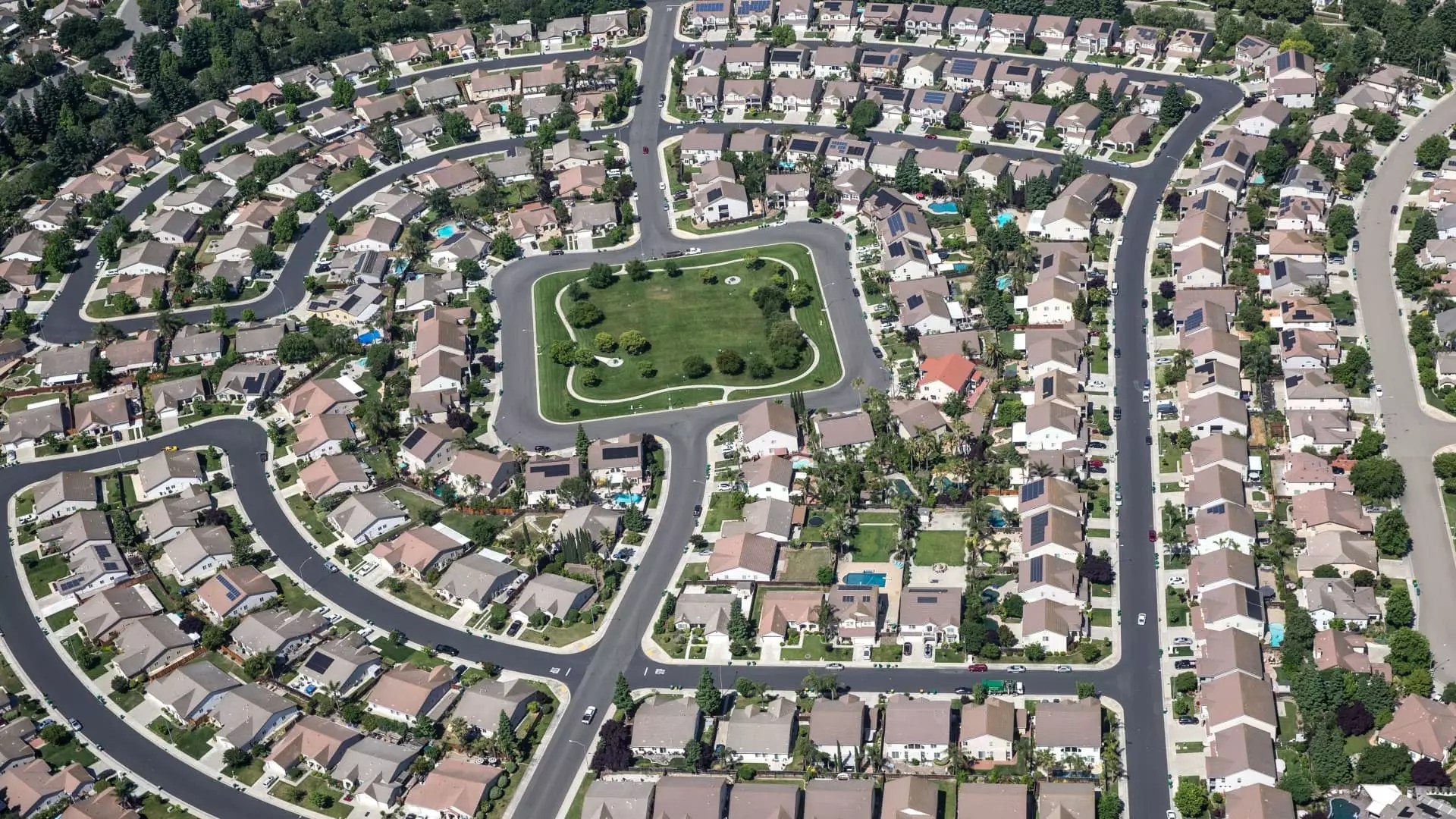
The swift rise in mortgage rates presents a unique challenge, reflecting a chaotic period leading to an environment filled with unsettling uncertainty. Mortgage rates typically align with the yield of the 10-year Treasury bond, which has been falling victim to an alarming sell-off. This isn’t just any sell-off; it’s a signal that investors are feeling uneasy about the state of our economy. They are offloading U.S. Treasury bonds as a desperate maneuver to safeguard their investments against the aggressive tariffs set out by President Trump. This situation raises eyebrows, especially regarding the stability of the housing market, which is at the mercy of external forces.
The Chinese Threat
China’s position as a heavyweight holder of mortgage-backed securities (MBS) cannot be overstated. The fallout from its possible retaliation against the U.S. could be catastrophic if it began unloading its MBS holdings en masse. Market analysts like Guy Cecala point out that if China chooses to apply economic pressure, targeting U.S. housing finance could result in devastating consequences. It’s a stark reminder of how intertwined global economic stability is with domestic housing policies—a precarious balancing act that could tilt dramatically toward crisis if relations with major powers sour.
Furthermore, the prospect of China joining the selling spree already occurring among various nations raises serious red flags. If they decide to escalate, other nations might follow suit with their holdings, leading to a perfect storm of rising mortgage costs and eroding homeownership prospects. This convoluted web of international finance is one that should be carefully navigated, especially when the stakes are already high for American families.
The Metrics of Concern
At the end of January, foreign entities collectively owned over $1.32 trillion in U.S. MBS. This illustrates just how vulnerable the housing market has become. Top owners like Japan and Canada already exhibit erratic behavior regarding their MBS investments. Regions that once seemed stable, such as Japan’s holding patterns that fluctuated drastically, cause investor trepidation. As asset economics continues to shift, so does market sentiment, and we can expect mortgage spreads to widen—a direct byproduct of international volatility.
Each increment of this widening implies higher rates for homebuyers, making an already challenging housing market even more fraught with difficulty. The onset of rising mortgage rates is particularly troubling when combined with the jarring realities of high property prices and dwindling consumer confidence. Potential homebuyers are finding themselves in a fight for survival; their dreams of homeownership quickly dissolve as financial markets continue to fluctuate.
Worrisome Indicators for Prospective Buyers
As spring emerges—often heralding new opportunities for homebuyers—the current state of affairs in the U.S. housing market is anything but encouraging. The recent tumult in the stock market leaves many potential buyers feeling paralyzed as fears of job loss and retirement savings evaporation loom large. Real estate firms like Redfin echo the concern, revealing that 1 in 5 prospective buyers are considering liquidating stocks to fund down payments. It’s a desperate gamble in a volatile landscape filled with uncertainties.
The impact of foreign MBS sales cannot be understated either. According to analysts, such movements—a knee-jerk reaction to political pressure—could further scar the mortgage market and harden financial barriers to entry into homeownership for the average American. A lack of clarity around foreign entities’ appetite to sell MBS only breeds more speculation, causing investors to be increasingly jittery and reluctant to engage in the housing market.
The Fed’s Dilemma
Adding fuel to the fire, the Federal Reserve, which has previously acted as a stabilizing force by purchasing MBS in times of crisis, is now in a retreat. As it works to shrink its balance sheet, the diminishing involvement of the Fed can only exacerbate the current tension in mortgage rates. This is a significant shift from prior practices where they sought to keep rates low during downturns. The decision to let MBS roll off the books is not just a strategic financial maneuver; it’s a stark indication of a callous approach to scrutinizing the financial repercussions on everyday Americans.
In this fraught environment, where economic and geopolitical tensions collide, the average family stands to lose the most. With rising mortgage rates posing significant barriers to entry for would-be homeowners, the promise of the American dream looks more like a mirage. It’s imperative that policymakers reconsider their strategies, aiming not just for economic metrics but for the everyday lives of citizens who aspire to have a slice of the American dream.

- Investment Planning For Students Yelofunding - January 8, 2026
- Commercial Real Estate Analysis And Investments Types - January 8, 2026
- 500 Million Reason to Pause: A Critical Look at Louisiana’s Tax Proposals - June 6, 2025
Leave a Reply