
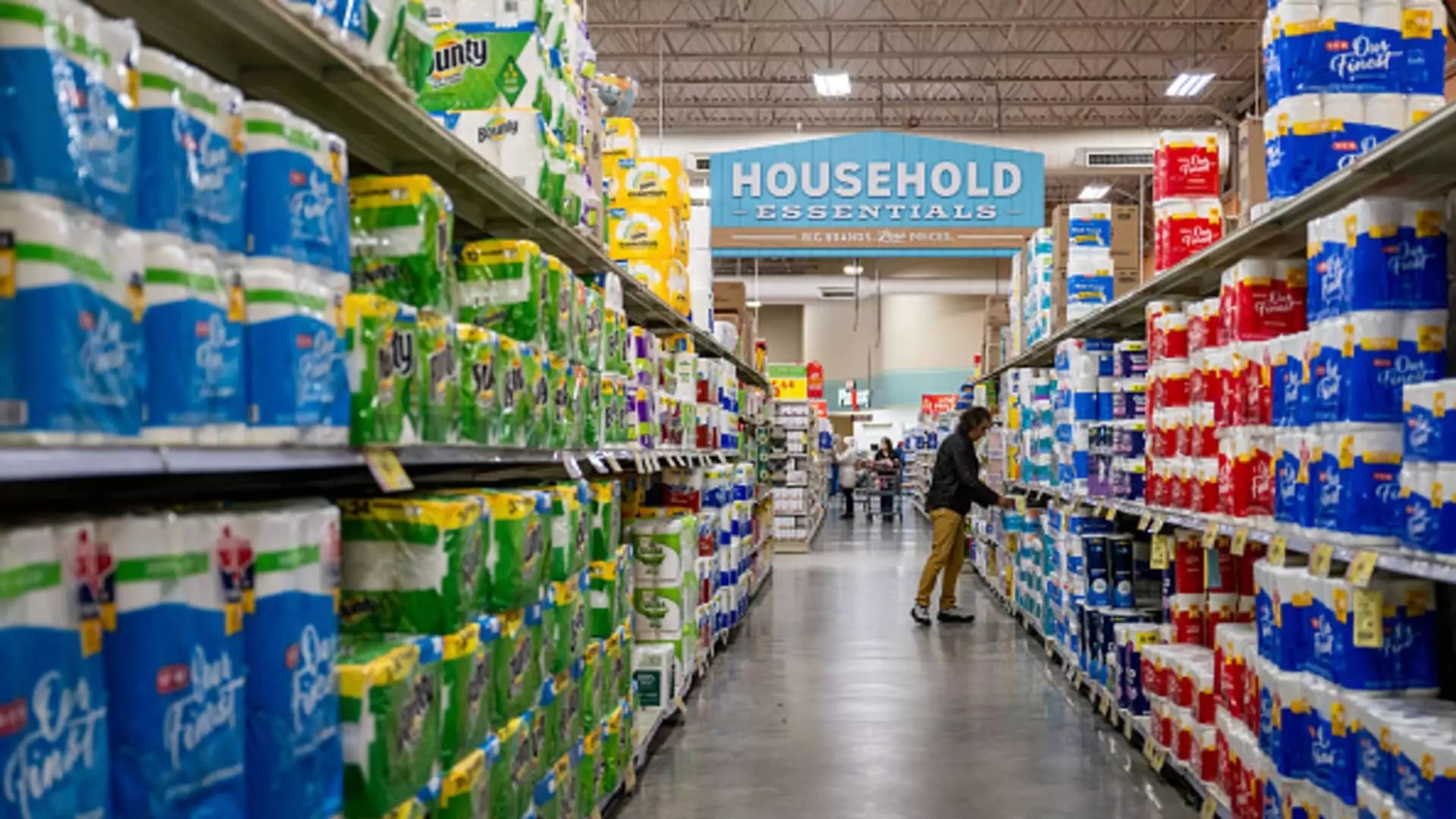
In a dramatic move intended to bolster American jobs and industry, the Trump administration has initiated a sweeping increase in tariffs on imported goods from over 180 nations. The decision, which aims to champion an “America First” economic strategy, poses profound questions not just about international trade, but also the everyday lives of American consumers. As we prepare to shell out more for staples like coffee, bananas, and toilet paper, it’s vital to dissect the potential consequences of such a radical policy on our wallets and consumer choices.
The Reality of Supply Chains
Industry stakeholders, represented by the Consumer Brands Association, emphatically assert that while the intent behind the tariffs may be noble, the execution could be disastrous. Many essential ingredients used in American kitchens—be it in beloved food products or daily necessities—are simply not produced domestically. The idea that we could return to some idealized era of self-sufficiency ignores the complex and globalized nature of supply chains that modern businesses rely on. In particular, sectors like the spice market are bracing for significant price hikes due to increased tariffs, fundamentally altering consumer purchasing habits.
For instance, Madagascar’s vanilla beans, a cornerstone of countless American desserts, have already had consumers digging deeper into their pockets due to previous spikes in price. With the new duty hitting imports hard, home bakers might find themselves priced out of something as simple as vanilla extract. Quality products are not just being pawned off as luxuries; they’re being transformed into unaffordable commodities.
The Illusion of Job Creation
Proponents of the tariff initiative argue that such measures will catalyze a return of American manufacturing jobs; however, this perspective fails to acknowledge the nuanced realities of the modern economy. For every job that may be created in a protected industry, countless others in import-dependent sectors could be at risk. The reliance on international sources for key ingredients signifies that job losses may very well outpace job creation, particularly in consumer staples that many families depend on daily.
Take, for instance, the oats used for breakfast cereals or the raw materials for essential household products. With over 90% of oats milled in the U.S. sourced from Canada, the tariff’s impact could resonate deeply within food supply channels. Furthermore, American agricultural practices have undergone fundamental shifts, leading to a scenario where domestic production simply cannot keep pace with demand.
Impact on the Average Family
Families already grappling with rising costs in a high-inflation economy are now facing the specter of increased prices on common goods. Consider toilet paper or household essentials like diapers and lotions—these are not luxury items for most Americans. They are staples of modern life, and yet they are poised for price increases. Essential materials like wood pulp and palm oil—all subject to tariffs—are integral to everyday products. For some families, these increases could mean making difficult choices about what to buy.
The reality is that tariffs, instead of protecting American-made goods, inadvertently punish consumers. This is especially concerning when market analysts indicate that stock prices for essential consumer goods may stabilize or even rise as retailers attempt to pass on these costs. As consumers, we are effectively stuck between a rock and a hard place—a toxic cocktail of government policy and market forces that ultimately manipulate our purchasing power.
Economics in Motion: Consumer Response
In a curious twist, while markets stumbled in reaction to the tariff announcements, stocks in the consumer staples sector experienced an uptick, indicating that investors are increasingly ditching riskier assets in favor of stable household necessities. It seems the complexities of capitalism are at play, where the fabric of everyday life can act as a hedge against economic volatility. Yet, this may backfire as consumers begin to seriously reassess their buying habits; boosting prices may result in decreased demand, creating a vicious cycle that could spiral out of control.
The introduction of tariffs is more than a mere economic maneuver; it is a catalyst for unforeseen consequences. As the administration champions its protectionist stance, it must grapple with the reality that the complexities of the global market and the livelihoods of American families rest uneasily in the balance. A safeguard for employment or a slippery slope into inflated prices? Only time will tell, but currently, the outlook appears grim.

- Investment Planning For Students Yelofunding - January 8, 2026
- Commercial Real Estate Analysis And Investments Types - January 8, 2026
- 500 Million Reason to Pause: A Critical Look at Louisiana’s Tax Proposals - June 6, 2025
Leave a Reply