
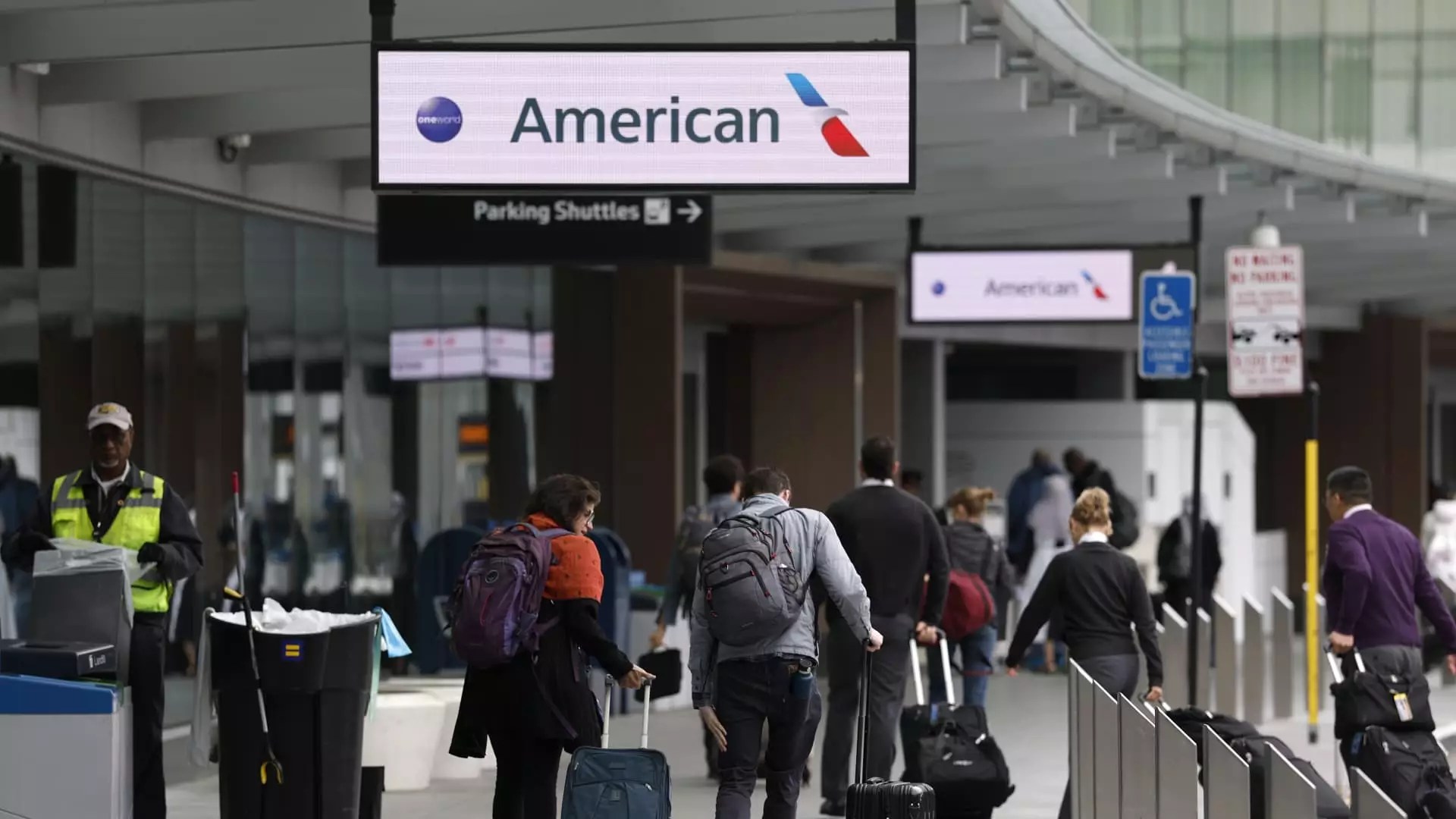
In an era marked by confusion and unpredictability, the air travel sector is grappling with a looming crisis. Recent statements from airline executives paint a stark picture: the demand for domestic flights is tapering off more sharply than anticipated. During their quarterly earnings calls, leaders from major carriers like American Airlines, Delta, and Southwest Airlines expressed profound concerns about their forecasts for 2025—predictions that are rapidly sinking into the turbulent waters of uncertainty. Citing various factors, including shifting economic policies and international trade tensions, these executives illuminate the precarious state of the airline industry, especially as it attempts to deal with consumer hesitance and variable market conditions.
The specter of economic instability is palpable. The CEOs have pinpointed the Trump administration’s inconsistent tariff policies as a source of anxiety, which contributes to a consumers’ reluctance to spend their hard-earned dollars on travel. American Airlines CEO Robert Isom articulated the overarching sentiment succinctly: uncertainty kills enthusiasm for leisure spending. It’s an opinion many can resonate with; who embarks on a vacation when the very foundations of the economy seem shaken? Travel planning, often an exercise in excitement, is overshadowed by a cloud of apprehension.
The Price-Demand Dilemma
As passenger demand begins to evaporate, airlines find themselves in a familiar quandary—overcapacity and declining ticket prices. The decline in fares, indicated by a 5.3% drop in March compared to the previous year, signifies something more profound than merely a seasonal fluctuation; it’s a response to dwindling confidence among travelers. The airline industry relies heavily on the business travel segment, which boasts passengers less sensitive to price and more likely to book last-minute flights. However, the stagnation of corporate travel growth suggests that this crucial revenue stream may not recover as anticipated.
Airlines like Delta and Alaska are now bracing for a potentially bleak financial horizon. The forward-looking statements from these organizations reveal an impending reality: they’ve opted to retract their financial forecasts for 2025. This decision to roll back capacity growth plans reflects a staggering acknowledgment of current market conditions. As fare wars intensify, airlines are compelled to slash prices, even potentially jeopardizing their profit margins as they strive to fill seats. If ticket prices continue to plummet, the consequences could cascade throughout the industry.
The Impact on Corporate Travel
The declining trend in business travel is particularly concerning, as it represents a significant lifeline for larger carriers. The earlier optimism expressed by Delta’s CEO, Ed Bastian, about a 10% growth in corporate travel has been eroded, leaving many unsure about the future. Analysts have pointed out the vulnerability of corporate travel budgets in times of economic uncertainty. Companies are much more likely to cut down on travel expenditures when faced with shaky market conditions, which further limits airlines’ revenue and creates a vicious cycle.
What’s even more alarming is the chasm between domestic and international travel demand. While international trips still maintain popularity among U.S. travelers, domestic flights are witnessing a stark downturn. This duality raises questions about the state of consumer confidence and the willingness of the average traveler to leap into the unknown of air travel amid economic turbulence.
Hope Amidst the Storm?
Despite these disconcerting trends, some voices within the industry remain cautiously optimistic. American Airlines’ CEO stated that once economic certainty returns, recovery could be swift. Such declarations rest on the precarious notion that consumer confidence can rebound as quickly as it was lost. However, holding onto hope in an increasingly volatile ecosystem seems to be more of a gamble than a solid plan.
Airline leaders find themselves walking a tightrope; they have the capacity to adapt and innovate, yet the systemic pressures in the market complicate their strategies. Until consumers regain definitive confidence to invest in leisure travel, the airline industry faces an uphill battle. Only time will tell if the combination of strategic foresight, economic stabilization, and renewed consumer faith can pull this vital sector back from the brink of recession. But as the economic winds shift, it remains crucial for industry stakeholders and policymakers alike to consider the long-term ramifications of their decisions, lest the skies remain cloudy for far longer than anticipated.

- Investment Planning For Students Yelofunding - January 8, 2026
- Commercial Real Estate Analysis And Investments Types - January 8, 2026
- 500 Million Reason to Pause: A Critical Look at Louisiana’s Tax Proposals - June 6, 2025
Leave a Reply