
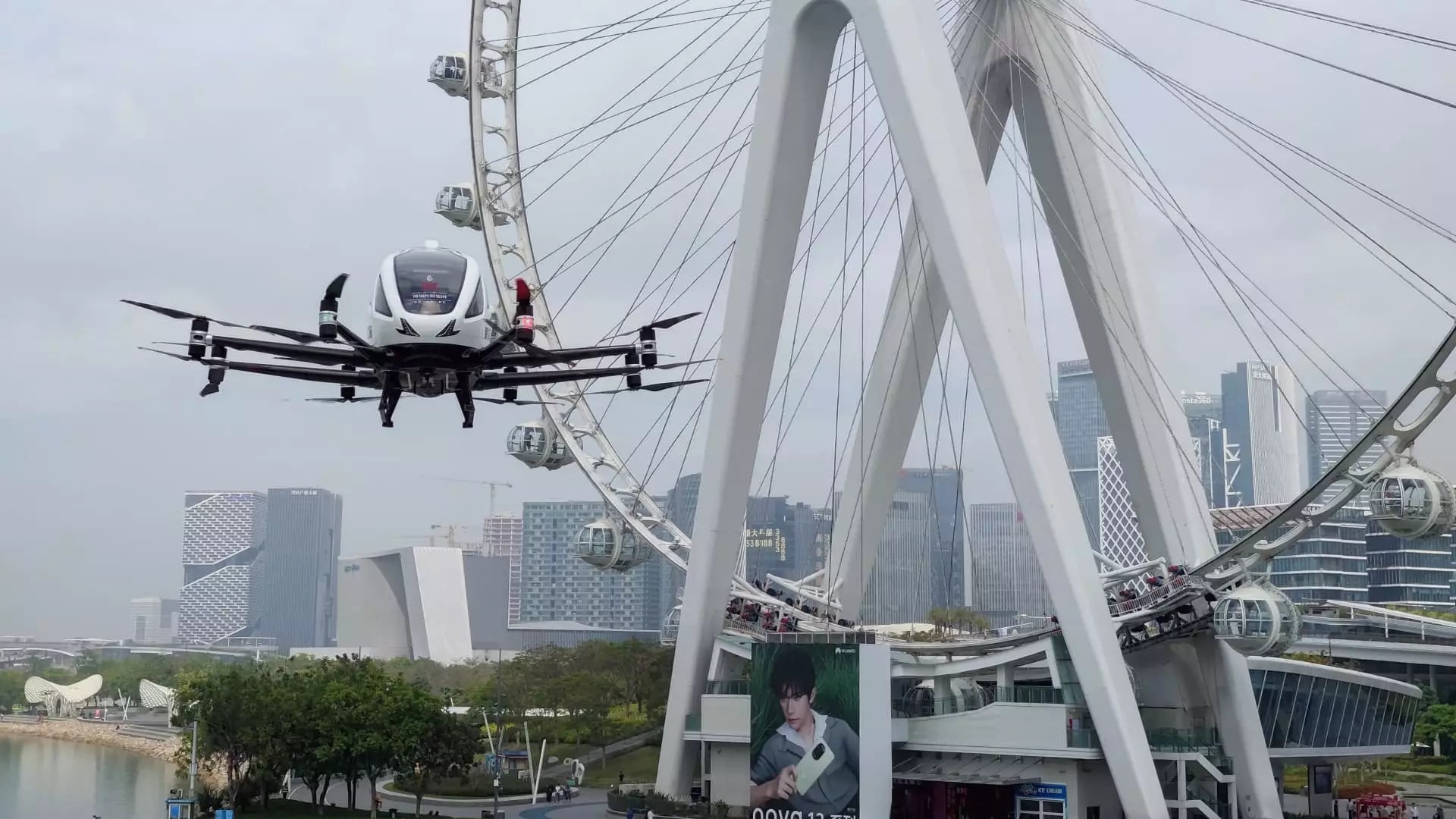
We’re on the brink of a transportation revolution. The emergence of electric vertical take-off and landing (eVTOL) vehicles promises to redefine how we perceive travel, especially in urban settings. As the demand for innovative solutions to urban congestion surges, one company stands out: Ehang, a Chinese startup that occupies a unique spot in this burgeoning industry. Unlike its American counterparts, which grapple with strict regulatory environments, Ehang has managed to not only innovate but also obtain certification for carrying passengers in its capable vehicles. In this article, we will scrutinize Ehang’s rise and the potential ramifications of its market strategies not just in China, but across the globe.
Ehang: Leading the Way into Low-Altitude Transport
It is astounding that while numerous startups globally strive to create autonomous flying vehicles, Ehang became the first company to win the green light from regulatory bodies for its eVTOL model, the 216-S. This aircraft, which operates silently and efficiently, is a testament to Ehang’s commitment to innovation and safety. Priced at about 2.39 million yuan ($330,000) domestically, it makes flying somewhat more accessible. Bank of America has boldly predicted that Ehang will maintain absolute market dominance in China from 2025 to 2027, a forecast largely attributed to the intricate airworthiness processes enforced by the Civil Aviation Administration of China. The barriers erected by regulations may deter new entrants, but they serve to reinforce Ehang’s monopoly in the near future.
Investor Confidence and Market Potential
With bank analysts backing the stock as a “must-buy,” it’s clear investor sentiment is high. Ehang’s anticipated rise to a stock value of $26—representing a substantial increase from previous standing—demonstrates the market’s bullish outlook on the eVTOL sector. As analysts believe they can deliver 442 units this year and 813 next year, the projected growth metrics—103% and 82% revenue growth in 2025 and 2026 respectively—are nothing to scoff at. It raises an interesting question: Can Ehang sustain this momentum in the face of rising competition, particularly from Joby Aviation and Archer Aviation? If it continues with its current trajectory, urban air taxis, an area Ehang is eyeing for future growth, could be a goldmine waiting to be tapped.
National Policy and Infrastructure: A Catalyst for Growth
One of the key differentiators propelling Ehang ahead of its Western rivals is China’s overarching national policies that favor the expansion of the so-called “low-altitude economy.” A staggering 300 Chinese local governments have already announced plans for investments in eVTOL infrastructure, suggesting that the government sees immense potential for societal upliftment through this new mode of transportation. It’s startling to observe the contrast between governmental enthusiasm and the bureaucratic red tape often found in the U.S. regulatory landscape, which is still formulating its certification rules for pilot flights.
Moreover, these policies extend beyond mere tourism; Ehang’s eVTOLs could revolutionize industries as disparate as emergency services and logistics, delivering supplies to remote locations seamlessly. It’s a clear display of how targeted governmental support can foster an ecosystem ripe for innovation, something America would do well to emulate.
The Risk Factor: Potential Pitfalls
Despite the rosy outlook, the road ahead is fraught with challenges. Analysts are right to caution against the dangers posed by operational hazards. Accidents, whether minor or catastrophic, could inflict irreparable damage on Ehang’s reputation and deter consumer trust, which is of utmost importance in an emerging field. While innovation can bolster a company’s prospects, neglecting safety considerations is a miscalculation that could slingshot Ehang’s growth trajectory into chaos.
One cannot discount the real possibility that developments in passenger injuries or regulatory pushbacks could stymie eVTOL adoption overall. However, if Ehang can navigate these treacherous waters, the rewards are undeniably substantial; the urban air taxi market alone could represent a future demand of 200,000 units, driving profits for years to come.
In essence, while Ehang stands as a beacon of potential in the modern transportation landscape, skepticism remains critical to maintaining a balanced viewpoint. The question of whether a regulatory framework that fosters innovation while ensuring passenger safety can be procured remains a battleground in itself. If we can teach the industry to learn from mistakes—something conventional transport has done poorly historically—the promise of a flying future could be more than just hyperbole.

- Investing In Wristwatches - March 8, 2026
- 7 Best Investment Options For Millennials - March 8, 2026
- Investment Planning For Students Yelofunding - January 8, 2026
Leave a Reply