
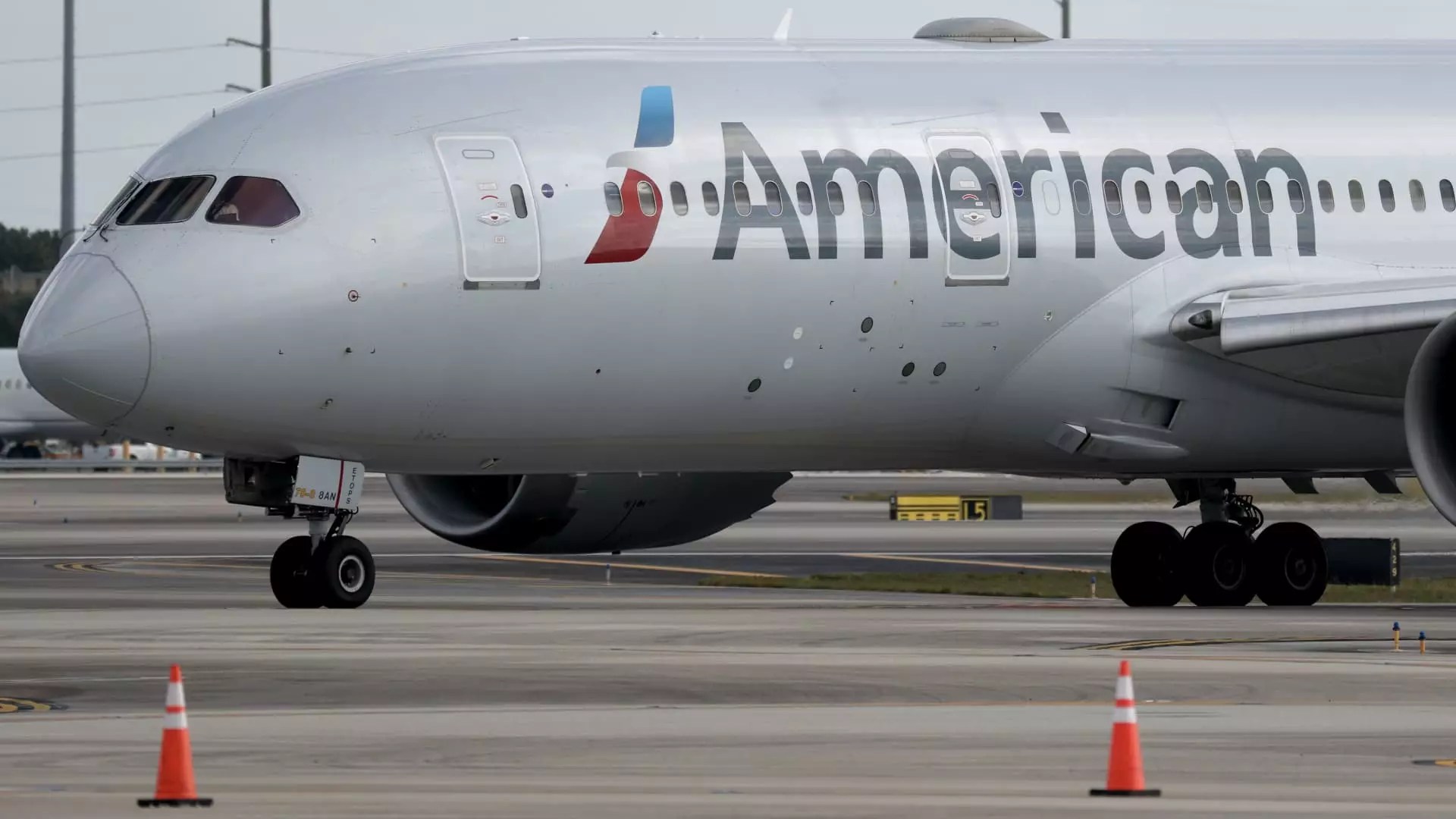
The air travel sector is often viewed through a lens of optimism; however, American Airlines’ recent decision to withdraw its 2025 financial guidance has unveiled an unsettling reality. The revelation comes amid ongoing concerns about the U.S. economy and a decline in leisure travel bookings. Travelers may recall a time when airlines leaned heavily on the bounce-back of leisure travel post-pandemic; however, the reality of current trends tells a different story, particularly for American Airlines, whose domestic leisure segment appears to be collapsing swiftly as expectations become shattered.
Management’s Mixed Signals: A Leadership Crisis?
CEO Robert Isom’s reflections on the state of the airline point to a harsh truth: despite strong performances in previous quarters, the immediate future presents a labyrinth of uncertainties. The mention of a significant drop-off in domestic leisure travel resonates troublingly in the ears of stakeholders. As leisure travelers shy away from making purchases, Isom seems caught between complacency and an urgent need to revitalize recovery strategies. Rather than offering a beacon of hope to investors and customers alike, the airline’s management seems to be adrift in a sea of confusing signals.
The Financial Fallout: Reality Check for Investors
In a harsh analysis of the numbers, American Airlines recorded a staggering $473 million loss in the first quarter, starkly contrasting with last year’s $312 million loss. With earnings per share falling short of the forecast predictions, the implications are severe. The disappointing figures expose a broader illness plaguing the industry’s reliance on leisure travel without sufficient diversification. If the airline industry is to emerge healthily from its current malaise, it will need to address more than just fluctuating demand; it must reassess its business models deeply.
Corporate Recovery Amid a Fragile Market
While American Airlines is attempting to mend its corporate travel strategies after previous failures, the economic climate remains hostile. The reference to tragic events like the American Eagle Flight 5342 accident may compound the airline’s issues, serving as a chilling reminder of the fragility within the aviation sector. When economic uncertainty mounts, corporate clients become more risk-averse, a situation that can lead to prolonged stagnation unless decisive actions are taken.
Future Implications and the Need for Adaptation
The stark reality is that American Airlines and its peers cannot simply rely on rekindling leisure travel without understanding the shifting behaviors of their customer base. With unit revenues down and capacity rising, which seems counterintuitive in a contracting market, the airline faces a complicated tapestry of challenges that demand urgent and thoughtful solutions. Center-right perspectives would affirm that market adaptation is crucial, positing that only innovative approaches and reimagined strategies can ensure survival in a demanding economic environment. Failure to evolve could permanently ground this once-mighty industry leader.

- Investment Planning For Students Yelofunding - January 8, 2026
- Commercial Real Estate Analysis And Investments Types - January 8, 2026
- 500 Million Reason to Pause: A Critical Look at Louisiana’s Tax Proposals - June 6, 2025
Leave a Reply