
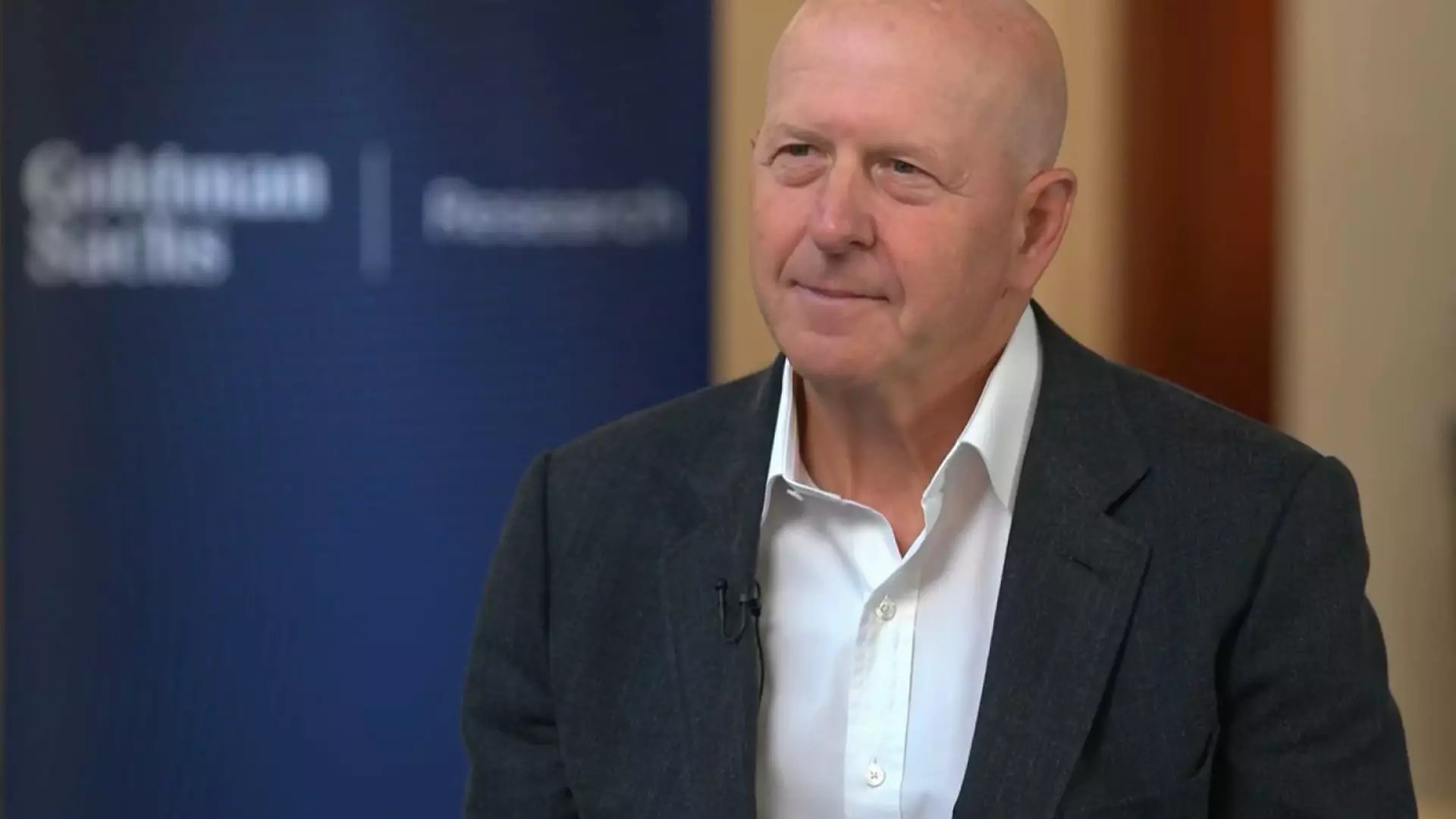
As the financial world grapples with fluctuating markets and political turbulence, Goldman Sachs recently announced first-quarter results that defied expectations, revealing a 15% profit increase amid challenges faced by many banks in a rapidly changing economic environment. The firm reported earnings of $14.12 per share, well above the analysts’ estimate of $12.35, enabling it to cement its position as a critical player in the investment banking arena.
Equities Trading Takes the Lead
At the heart of Goldman’s impressive performance lies a significant rise in equities trading revenue, which surged by a remarkable 27% to reach $4.19 billion. This figure not only exceeded analyst projections by a staggering $540 million but also showcased the importance of adaptability in a sector increasingly reliant on swift strategic decisions. With the volatility stemming from political shifts—especially in light of President Donald Trump’s ongoing trade tensions—the surge in trading activity illustrates how Goldman has harnessed market conditions to its advantage, attracting investors seeking refuge amidst uncertainty.
While the firm’s global banking and markets division celebrated a 10% revenue increase to $10.71 billion, the investment banking sector faced a more somber narrative. A notable 8% decline in investment banking fees to $1.91 billion underscores a broader industry trend towards caution, as clients reassess their strategic priorities in a less predictable economic landscape. The failure to meet analysts’ expectations in this area signals that not everything is rosy in the investment world, even if Goldman can lean on its trading arm.
Challenges in Asset Management
Goldman Sachs is not immune to the challenges posing threats to other banks. The asset and wealth management division experienced a 3% revenue decline to $3.68 billion, which slightly lagged behind market estimates. The firm specifically cited “significantly lower” income stemming from their investments, which include private equity, public stocks, and debt. Such declines reveal the fragility of investment strategies in uncertain market conditions and suggest that, while Goldman can thrive in trading, its asset management segment must adapt more effectively to the realities of a shifting economic paradigm.
Moreover, the firm’s platform solutions division observed a slip in revenue by 3%, signaling an area that requires reevaluation and reinvigoration. Goldman must extract valuable lessons from this performance—particularly as it beckons a crucial opportunity to reevaluate investment strategies and re-implement operational efficiencies that could mitigate future setbacks, especially during periods of political volatility driven by international dynamics.
A Leadership Call for Confidence
CEO David Solomon’s insights are critical during these turbulent times. His remarks alluding to the challenges posed by escalating trade tensions echo a larger sentiment in the financial sector. As markets oscillate between the extremes of hope and despair, Solomon emphasizes confidence and readiness to support clients. But can he walk the fine line between optimism and the sobering realities that many face?
In light of tumultuous market conditions, the divergence in performance between Goldman and its rivals, JPMorgan Chase and Morgan Stanley, raises intriguing questions about strategic execution and market capture. While these two competitors reported extraordinary equity trading growth—48% and 45%, respectively—Goldman’s performance indicates that its leadership must intensively analyze market movements and client sentiments. Initiating proactive measures rooted in data-driven insights could forge new pathways for competitive growth.
Taking into consideration the ongoing economic uncertainty brought on by changing trade policies, Goldman Sachs’ quarterly performance may be a double-edged sword. Yes, it shows resilience and an ability to capitalize on market volatility, but it also reinforces the urgent need for a proactive and responsive strategy in asset management and investment banking. The coming quarters will undoubtedly reveal whether Goldman can maintain this remarkable balance—or if it will need to pivot once more in response to an ever-evolving economic landscape. The scrutiny placed upon Solomon’s leadership and strategic decisions will fundamentally shape how the firm navigates the intricacies of the global financial system in the months ahead.

- Investment Planning For Students Yelofunding - January 8, 2026
- Commercial Real Estate Analysis And Investments Types - January 8, 2026
- 500 Million Reason to Pause: A Critical Look at Louisiana’s Tax Proposals - June 6, 2025
Leave a Reply