
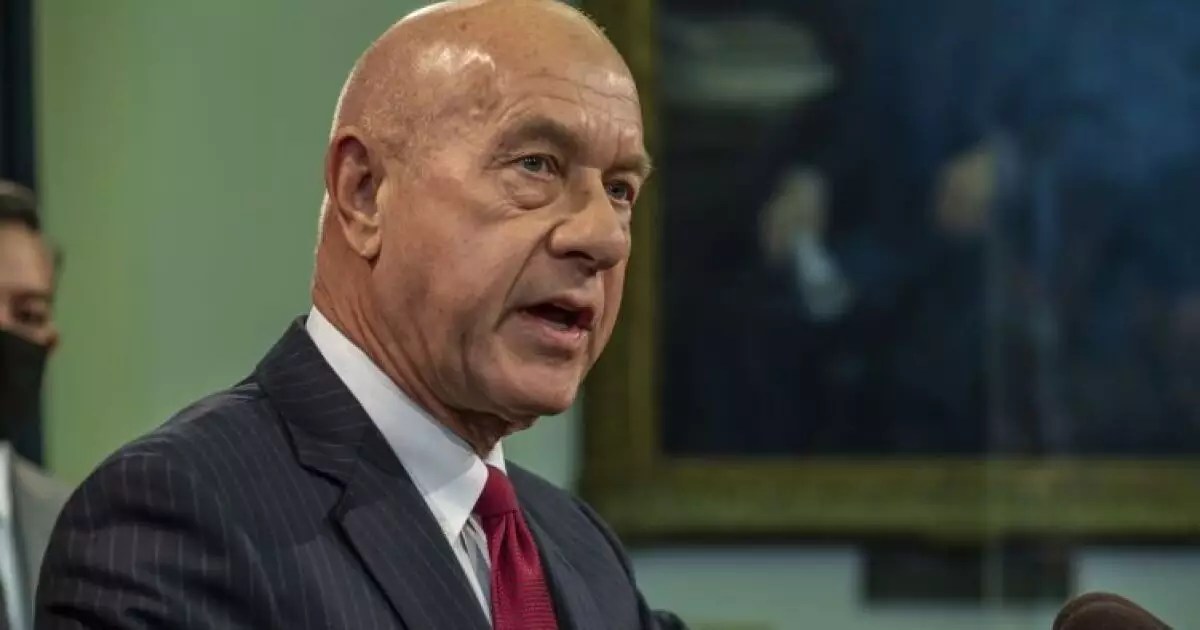
The recent financial agreement announced by Houston Mayor John Whitmire in response to a significant lawsuit has sent ripples through the city’s budget landscape. Dating back to 2019, this litigation forced the city to confront its deep-seated issues surrounding inadequate drainage and crumbling roadways. The implication is dire: a potential budget deficit that could balloon to $320 million due to the requirement to allocate $100 million in property tax revenue annually. While the mayor heralds this agreement as a “giant step forward,” one is left wondering if it is merely a temporary fix for a much larger and systemic problem.
A Band-Aid on Aging Infrastructure
Sure, allocating 67% of property taxes to address infrastructure in fiscal 2026, ramping up to a full 100% by fiscal 2028 sounds promising on paper. However, this is not just about numbers; it speaks to the neglect that has plagued Houston’s infrastructure for years. The excitement from city officials, including Mayor Pro Tem Martha Castex-Tatum, rings hollow when framed against the state’s track record of piecemeal solutions. The oft-cited “aging infrastructure” may become a relic of the past if proactive measures are not introduced alongside this agreement. Infrastructure issues do not arise overnight, and they cannot be resolved by pushing tax money around like chess pieces.
The Political Backdrop
Politically, this situation underscores the alignment of interests in the center-right liberalism spectrum. Whitmire’s administration aims to cut costs and curb spending, emphasizing efficiency as seen through the Ernst & Young study. But, is cutting corners the best approach in addressing such a pressing issue? It feels as if the authorities are continuously firefighting rather than implementing sustainable solutions. Furthermore, the adjustment of property tax allocations is a politically convenient albeit short-sighted maneuver that fails to generate a long-term strategy for the city’s infrastructure.
Financial Ratings and Dwindling Reserves
Financial health indicators tell a grim story. Houston’s budget reserve shrank from $349 million to $228 million within a few months, emphasizing a precarious fiscal position. Demotions or negative outlooks from Fitch Ratings and S&P Global serve as a glaring warning. Instead of surgical adjustments, the city needs a holistic and comprehensive strategy to ensure financial integrity. It seems that city officials are operating in survival mode, ultimately risking the city’s future for momentary relief.
An Inadequate Response to a Critical Situation
While the proposed reallocation of toll road revenues to shore up public safety funding sounds innovative, it can hardly mask the imperfections in Houston’s fiscal management. The notion that a $100 million allocation will resolve the underlying issues feels inherently flawed, and one can hardly shake off the feeling that this is simply a recipe for future discontent. Houston’s leaders must confront the ugly reality of their limitations head-on, avoiding superficial fixes and seeking out transformative changes. If this city is to thrive, it needs more than a Band-Aid; it requires a complete overhaul of its financial and infrastructure strategy.
In a city as dynamic as Houston, a proactive, resolute approach is not just recommended; it’s absolutely essential for a sustainable future.

- Investment Planning For Students Yelofunding - January 8, 2026
- Commercial Real Estate Analysis And Investments Types - January 8, 2026
- 500 Million Reason to Pause: A Critical Look at Louisiana’s Tax Proposals - June 6, 2025
Leave a Reply