
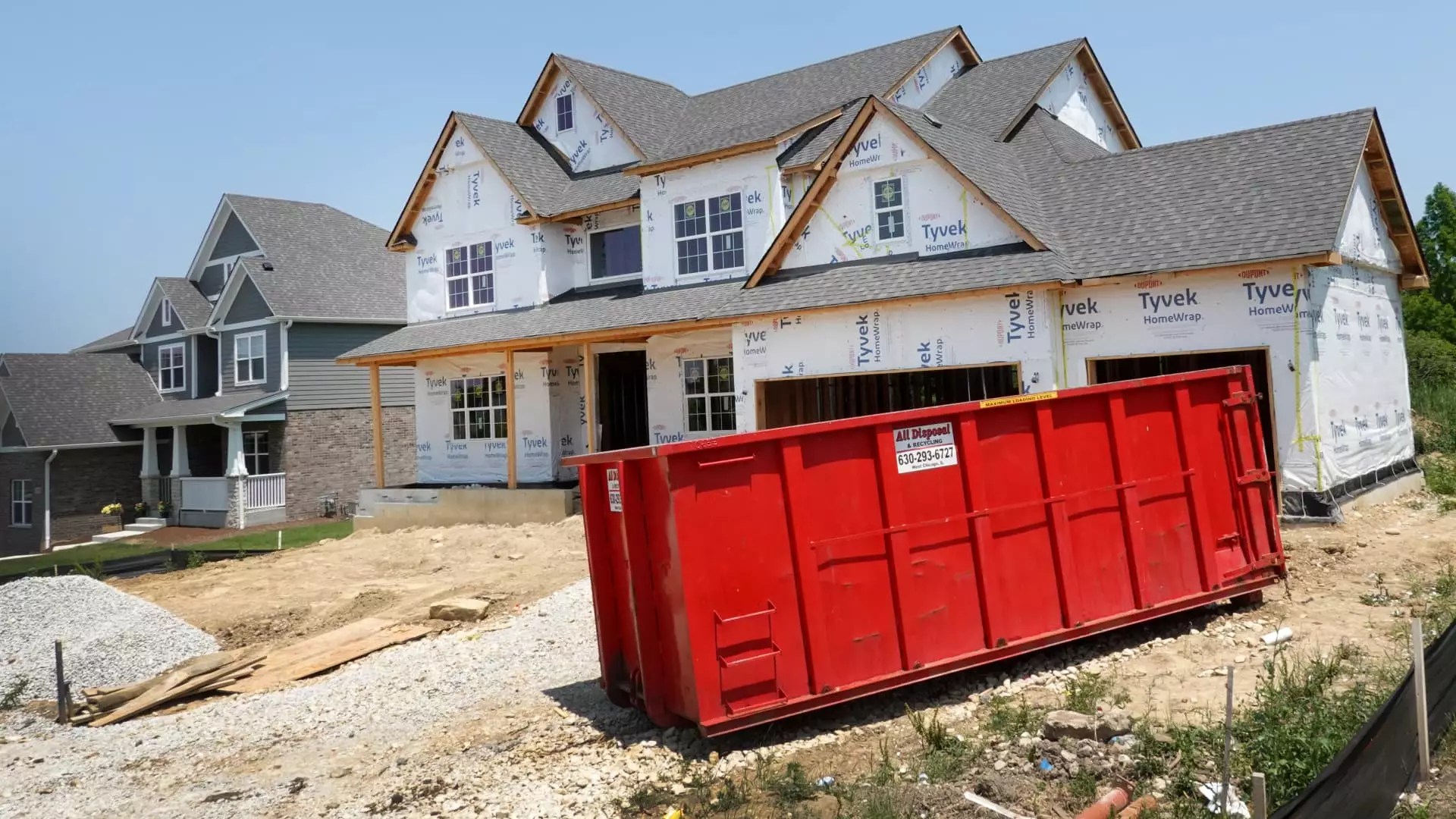
In a disheartening revelation, the National Association of Home Builders (NAHB) has estimated that President Donald Trump’s proposed tariffs could inflate the costs of building a new single-family home by as much as $10,000. This staggering figure emerges from anecdotal reports within the homebuilding community and underscores a worrying trajectory for housing affordability in the United States. Homeownership, often seen as a cornerstone of the American Dream, now finds itself besieged by punitive tariffs that threaten to undermine the very foundation of the housing market.
The association’s vehement stance against these tariffs illuminates a fundamental truth: they function as a direct tax on American builders and consumers. The implications of these tariffs extend far beyond mere numbers; they symbolize a national policy that places economic protectionism over domestic prosperity. By imposing additional burdens through increased material costs, the administration may simultaneously stifle home construction and drive prices beyond the reach of everyday Americans.
Underestimated Consequences of Tariff Policies
The complexity of the current trade situation is intensified by the nature of the building materials in question. The NAHB highlighted that essential resources like softwood lumber predominantly originate from Canada, while gypsum, a key component of drywall, is mainly imported from Mexico. The imposition of a 25% tariff on these imports is estimated to hike the aggregate costs of construction materials by over $3 billion—an alarmingly significant figure that has serious repercussions for builders and ultimately, homebuyers.
It is essential to recognize that this future burden does not solely affect builders accustomed to international sourcing. Even firms that primarily rely on domestic materials will feel the ripple effects of increasing prices across the board. As competition for resources heightens and supply chains tighten, domestic manufacturers may also raise their prices to keep pace, further escalating costs for developers and consumers.
Market Uncertainty and Erosion of Investor Confidence
The fallout from Trump’s tariff announcements has already sent shockwaves through the stock market. The SPDR S&P Homebuilders ETF, which tracks the performance of the homebuilding sector, plummeted more than 22% from its late November highs. This level of investor anxiety reflects a growing unease regarding the broader implications of tariffs on housing and construction viability. It’s vexing to witness how swiftly the market can react to governmental policies that seem to lack clarity and consistency.
Homebuilders like D.R. Horton rely on predictability for their operations. With roughly 20% of their lumber sourced from Canada, the specter of newly imposed tariffs has induced chaos regarding cost projections and planning. Jessica Hansen, the firm’s head of investor relations, adeptly captured the sentiment of uncertainty that permeates the sector: “There’s really no way to proxy what that could ultimately cost.” The grim reality is that builders are left scrambling to find financial equilibrium in an increasingly volatile economic environment.
A Market Divided: The Impact on Localized Supply Chains
It’s noteworthy how the tariff issue has diverging effects even within the homebuilding community. Companies like K.B. Home that make a concerted effort to source materials domestically are finding themselves in a double-edged scenario. Enhanced demand for American-made products resulting from tariffs might drive prices up, creating a competitive landscape that complicates pricing strategies. Consequently, builders must carefully navigate their procurement processes, signaling a need for strategic negotiations amidst increasing material costs.
Ali Wolf, chief economist at housing data provider Zonda, emphasized that Trump’s tariff policy could drive up building material costs by as much as 14%. While the administration’s intentions might stem from a desire to prioritize American jobs, that approach may paradoxically lead to job losses in the housing sector. Furthermore, the looming specter of immigration reform that accompanies the tariffs threatens to thin the labor pool, compounding challenges for builders already grappling with rising costs and shrinking margins.
Looking Beyond Tariffs: Regulatory Impacts on Housing
While tariffs garner significant attention, the broader regulatory landscape established by this administration has also yielded mixed outcomes. On one hand, heightened deregulation appears favorable for economic growth and may invigorate a market starved for opportunity. Homebuilders express optimism regarding this regulatory relaxation, which could incentivize development and investment. Yet, the looming concerns about tariffs and immigration policy serve as a stark reminder that the path to recovery isn’t straightforward.
As we delve deeper into the complexities of our current trade policies, it becomes imperative for both policymakers and industry leaders to realize that the seemingly isolated issue of tariffs significantly impacts the housing market. In doing so, we can hope to rebuild the American Dream, while navigating the murky waters of trade policy with foresight and caution. The stakes couldn’t be higher; as material costs soar and market uncertainties persist, the promise of homeownership stands at a precarious precipice.

- Investment Planning For Students Yelofunding - January 8, 2026
- Commercial Real Estate Analysis And Investments Types - January 8, 2026
- 500 Million Reason to Pause: A Critical Look at Louisiana’s Tax Proposals - June 6, 2025
Leave a Reply