
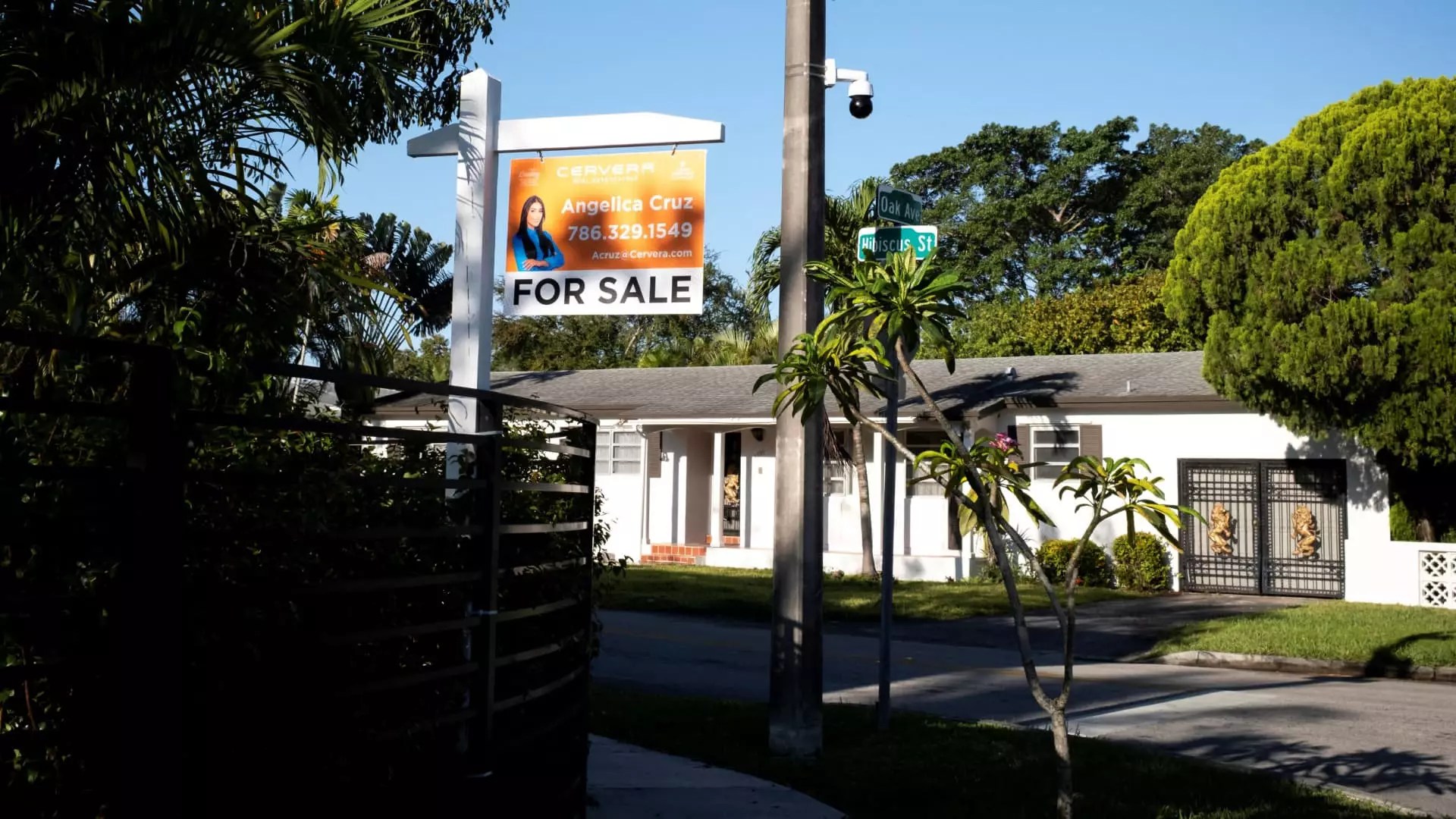
The spring housing market, traditionally a time of vigor and expansion, is facing a catastrophic start in 2024. High mortgage rates coupled with growing economic apprehension have created an environment where home sales reflect a bleak reality. Sales of previously owned homes plummeted by 5.9% from February to an adjusted annualized rate of 4.02 million units in March, marking the slowest March since 2009. With a decline of 2.4% compared to the same month of 2024, it seems that the once-robust real estate market is grappling with a significant downturn across the board, notably in the West, where sales fell more than 9% month-to-month. The only silver lining for that region is its yearly increase driven by job growth in the Rocky Mountain states, raising questions about whether the situation is as dire as it appears.
Affordability Crisis and Mobility Stagnation
One of the core issues plaguing the housing market is affordability, largely driven by soaring mortgage rates. Lawrence Yun, chief economist at the National Association of Realtors (NAR), points out that this has constrained home buying and selling activities significantly, resulting in historic lows in residential housing mobility. In a prosperous society, mobility is vital—yet today, it seems that many potential buyers are trapped in their current homes, unable to afford upward movement in the market. The implication here is clear: the lack of affordable housing not only impacts individual families but can hinder broader economic progression.
The real tragedy is the disheartening reality of those first-time buyers—only making up 32% of the market in March, a stark reduction from the historical norm of around 40%. This demographic is being crushed under the weight of unrealistic expectations and growing financial pressures, further exacerbating the declining mobility problem. How can an economy thrive when the new generation is effectively locked out of the housing market?
Unexpected Inventory Rise Amid Declining Sales
Eerily contrasting the declining sales figures, available listings surged by nearly 20% year-over-year, with inventories climbing to 1.33 million units. Despite this apparent influx of options, we find ourselves in a precarious situation; at the current sales pace, we’re looking at an equivalent of a four-month supply. For a balanced market—where both buyers and sellers have equal footing— we would ideally want a six-month supply. As the market becomes awash with listings but lacks the sales momentum, the chilling effects on home prices start to materialize.
The median price of existing homes in March remained at an all-time high of $403,700, but the annual increase of only 2.7% shows a concerning trend of shrinking growth. Moreover, Yun’s assertion that while real estate asset valuations have soared, household wealth in residential real estate has hit $52 trillion, seems a cold comfort against the backdrop of structural inequities that prevent families from capitalizing on these gains.
The Future of Home Buying: Signals and Signs
As we look ahead, the rising tide of cancelled contracts paints an ominous picture, particularly amidst stock market volatility. If the housing landscape is already struggling, what does the future hold? Economic forecasters, like Robert Frick from Navy Federal Credit Union, warn that March’s figures are merely the tip of the iceberg—that the worst may still be on the horizon. The ramifications of high mortgage rates are not confined to individual buyers; they ripple through the economy, constraining overall growth.
Understanding these troubling realities illuminates a broader cultural critique. The American dream of homeownership, once a rite of passage for many, is now riddled with obstacles that question our national commitment to economic mobility. Is it not essential for a prosperous society to work towards fixing these systemic issues affecting homeownership? Our economic future hinges on our ability to create an accessible path for all families to simply pursue the dream of owning a home once again.

- Investment Planning For Students Yelofunding - January 8, 2026
- Commercial Real Estate Analysis And Investments Types - January 8, 2026
- 500 Million Reason to Pause: A Critical Look at Louisiana’s Tax Proposals - June 6, 2025
Leave a Reply